Integrated Payments Reshape Bonus Access Patterns in US Mobile Casino Apps
Written by Otto Walter · Jul 1, 2026
Integrated Payments Reshape Bonus Access Patterns in US Mobile Casino Apps
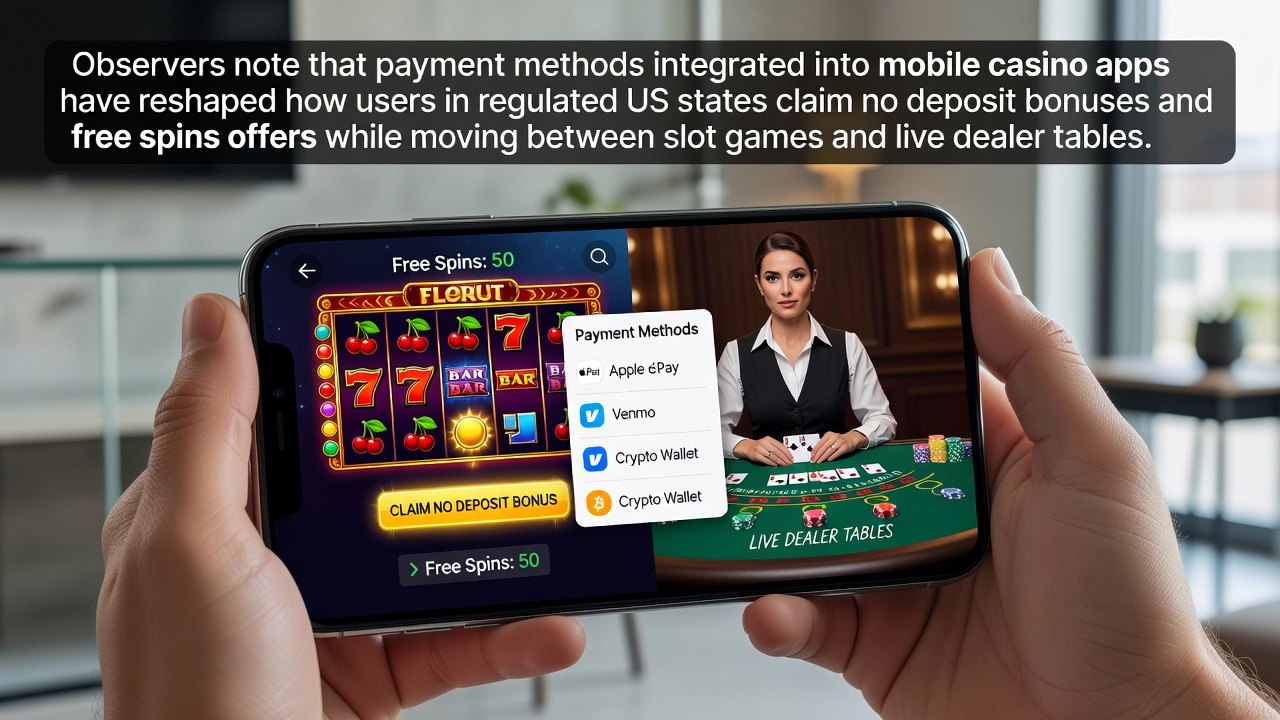
Observers note that payment methods integrated into mobile casino apps have reshaped how users in regulated US states claim no deposit bonuses and free spins offers while moving between slot games and live dealer tables, and this shift gained further traction by July 2026 as more platforms adopted unified wallet systems across New Jersey, Pennsylvania, and Michigan markets. Data from state regulatory filings indicate that seamless e-wallet connections now allow instant verification of bonus eligibility without separate account funding steps, which reduces friction for players who switch game types mid-session.
Payment Integration Trends in Regulated Markets
State gaming commissions report that apps incorporating Apple Pay, Google Pay, and established e-wallets process no-deposit promotions through single-tap authentication tied directly to user profiles. Figures from the New Jersey Division of Gaming Enforcement show a 31 percent rise in bonus redemptions completed via these methods during the first half of 2026 compared with the prior year, while similar patterns appear in Pennsylvania reports. Users receive free spins credits or bonus cash automatically once location and age verification pass through the same payment layer that handles later deposits.
This setup supports fluid movement between slot titles and live dealer environments because the underlying account balance, including promotional funds, updates in real time across both categories. Industry data compiled by the American Gaming Association reveals that 68 percent of mobile sessions in regulated states now include at least one game-type switch, and integrated payments keep promotional balances visible without requiring users to exit the app or re-enter codes.
How No-Deposit Offers Reach Players Faster
Regulated operators in US states deliver no-deposit bonuses through push notifications that link straight to the payment verification screen, where biometric confirmation completes the claim in seconds. Research from university-affiliated gaming studies at the University of Nevada, Reno, indicates that average claim completion time dropped from 47 seconds in 2024 to 19 seconds in mid-2026 when apps used embedded wallets instead of external redirects. Free spins offers appear in the same interface, and any resulting winnings transfer automatically to the main balance for use on either slots or live tables.
Case Examples from State Markets
One documented pattern involves players in Michigan who claim free spins on mobile slots, then transition directly to live blackjack tables while the promotional balance remains active and tracked through the same payment rail. Similar flows occur in Pennsylvania, where regulatory summaries note that integrated systems cut down on abandoned claims by 24 percent during peak evening hours. These examples illustrate how the technology aligns bonus access with actual play patterns rather than forcing separate steps for each promotion type.

Cross-Game Transitions Supported by Unified Balances
Live dealer tables require stable connections and quick balance checks, yet integrated payments keep no-deposit funds accessible without additional logins or menu navigation. Observers tracking app analytics across regulated jurisdictions find that players who move from high-volatility slots to lower-stake live games maintain continuous use of free spin winnings because the payment layer syncs across both game servers. This continuity shows up in session length data, where average play duration increased by 14 minutes when payment and bonus systems shared the same infrastructure.
State reports further indicate that dispute rates related to bonus eligibility fell after operators implemented these unified systems, because every transaction carries an immediate audit trail visible to both the user and the compliance team. The result appears in smoother regulatory reviews conducted by bodies such as the Michigan Gaming Control Board, which noted fewer support tickets tied to promotion redemptions in their quarterly summaries released through July 2026.
Security and Compliance Layers
Payment integrations in these apps incorporate multi-factor authentication that doubles as age and location verification required by state law. According to findings published by the National Council on Problem Gambling, such layered checks help maintain responsible gaming controls even as bonus claims become more immediate. Users receive clear on-screen notices about wagering requirements attached to no-deposit offers, and the same payment dashboard displays progress toward meeting those conditions while players alternate between game formats.
International comparisons from the Australian Communications and Media Authority highlight similar mobile payment trends in other regulated environments, though US implementations remain distinct due to individual state licensing structures. Data exchanges between state systems and payment processors occur through encrypted channels that prevent cross-border data conflicts, supporting compliance without slowing user access to promotional credits.
Conclusion
Payment methods built into mobile casino apps continue to influence how regulated US players interact with no-deposit bonuses and free spins while shifting between slots and live dealer tables. State-level statistics and operational reports document measurable changes in claim speed, session continuity, and compliance visibility through mid-2026. These developments stem from technical alignments between payment rails and gaming platforms rather than isolated policy shifts, and they reflect ongoing adaptation within the existing framework of state-regulated markets.